 HI-TOP
COEX, State Of The Art Technology For multi-layer containers
Multi-layer HDPE bottles for crop protection, fertilizers, veterinary and industrial chemicals.
Built for the chemistry that defeats ordinary HDPE
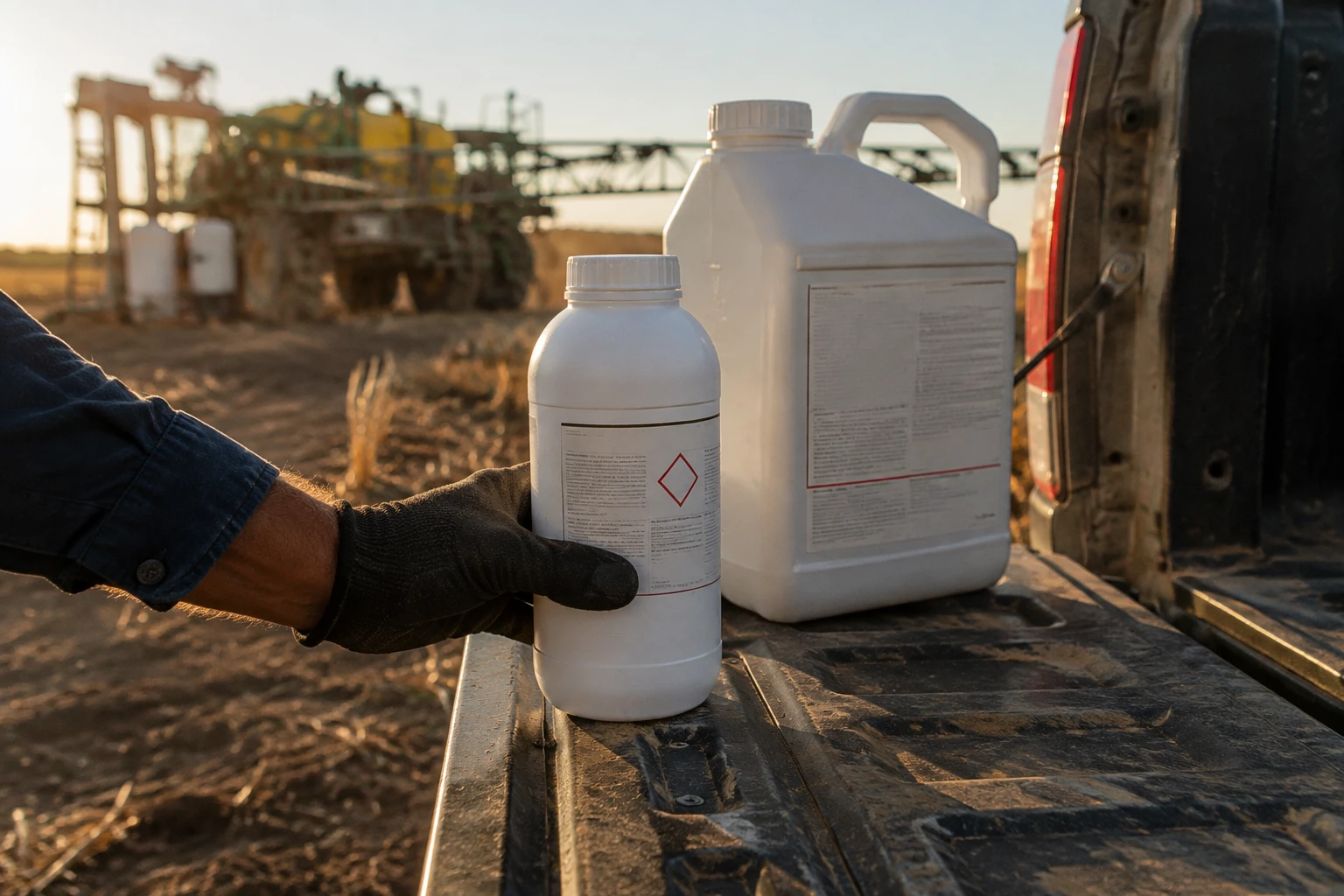
The products our customers pack are among the most demanding a plastic container can hold. Emulsifiable concentrates carrying aromatic solvents. Acidic liquid fertilizers. Veterinary formulations that must hold potency for two years in a hot warehouse. Industrial chemicals classified as dangerous goods.
Standard HDPE was never designed for this. It is a non-polar material, which means non-polar substances such as aromatic solvents, hydrocarbons and oxygen dissolve into the wall and migrate straight through it.
Packers know the symptoms. Bottles that panel and deform on the shelf. Measurable weight loss over shelf life. Actives that lose concentration or fail re-analysis. Solvent odour in the warehouse. Walls that grow brittle and fail drop testing after storage.
Coextrusion solves this at the material level. Rather than treating the surface of a finished bottle, we build a high-performance barrier polymer into the wall as a true structural layer, positioned in direct contact with the product. Your formulation never touches the HDPE. The barrier is part of the container, so it cannot wear off, scratch off, or fade with age.
Our COEX structure
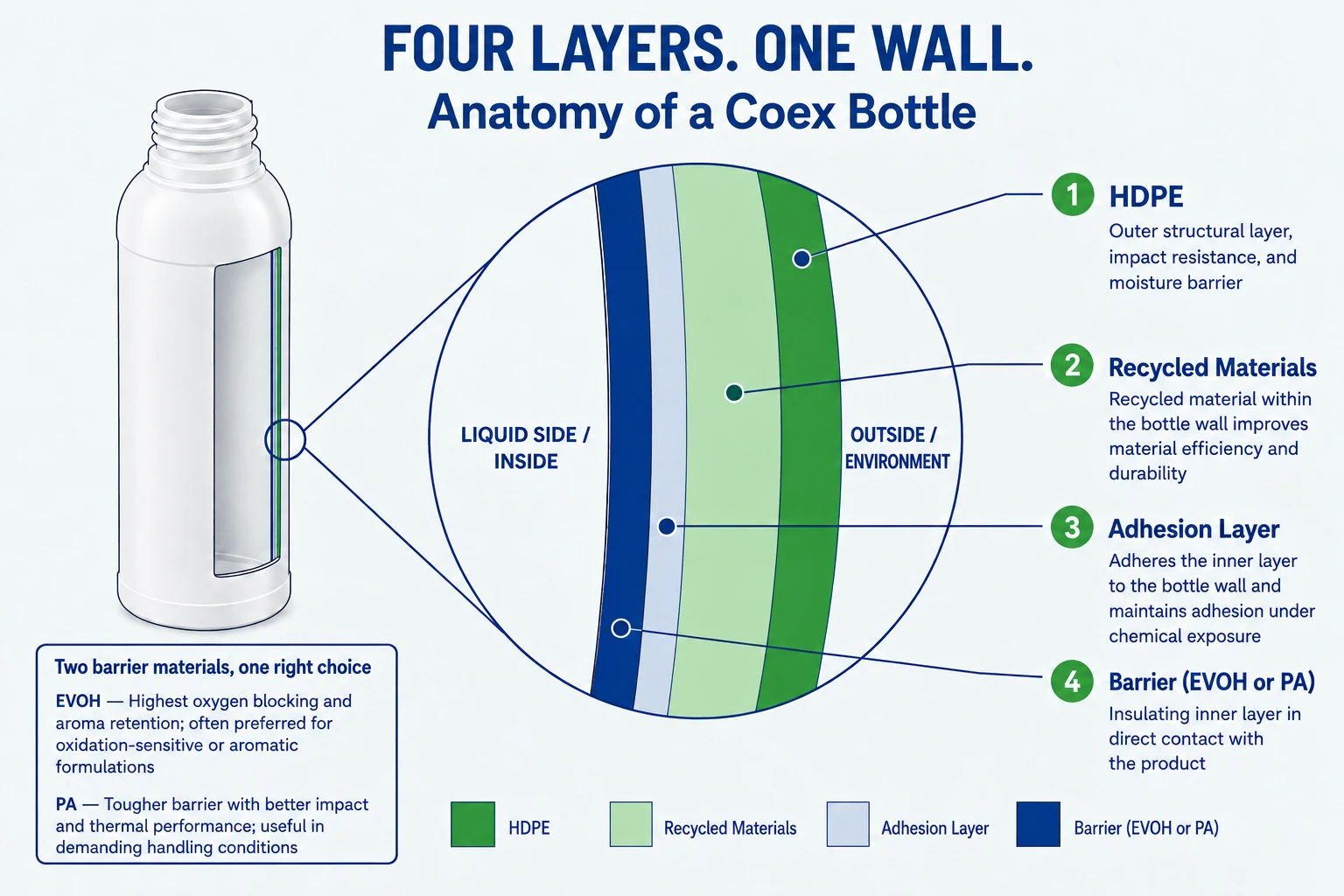
Four layers: HDPE, regrind, tie, barrier. Every COEX bottle we produce is built on a single principle — the barrier polymer forms the inner surface of the wall, so your formulation is in contact with the barrier and never with the HDPE.
Tie layers are not filler. Barrier polymers will not bond to HDPE on their own, and it is long-term adhesion under chemical exposure, not day-one performance, that determines whether a bottle survives its shelf life. We specify and control them accordingly.
- HDPE
- The outer layer carries the structure, impact resistance and moisture barrier.
- Regrind
- Recovers production scrap back into the wall, improving material efficiency and adding stiffness without adding cost.
- Tie
- Bonds barrier to structure, and holds that bond under chemical exposure.
- Barrier
- Does the protective work, in direct contact with the product.
Two barrier materials, one right answer for your formulation
We work with both leading barrier polymers and select between them based on your chemistry, not on a house default.
- EVOH — ethylene vinyl alcohol copolymer
- The highest-performing barrier polymer in commercial packaging. EVOH cuts oxygen transmission by roughly four orders of magnitude against HDPE and delivers outstanding resistance to aromatic hydrocarbons. It is the industry reference for EC formulations built on xylene, toluene and Solvesso-type solvents, for fumigants and volatile actives, and for any product whose shelf life is limited by oxidation. It also holds up where polyamide cannot, notably against acidic fertilizers and phenolic disinfectants. Specified for: aromatic solvent formulations, oxygen-sensitive actives, fumigants, acidic liquid fertilizers, chlorinated solvents, phenolic and iodophor disinfectants.
- PA — polyamide (nylon)
- The tougher, more forgiving barrier. PA resists hydrocarbon and polar solvents alike and brings mechanical value that matters in agricultural distribution: superior impact and drop performance, higher thermal resistance for hot climates and hot-fill lines, and stable behaviour against water-based formulations held for years. Specified for: water-based crop protection (SC, SL, SE, EW), polar solvent carriers, veterinary pour-ons and spot-ons, hot-fill products, rough distribution and cold-chain handling.
Which barrier for your product
| Segment | Typical formulation | Barrier |
|---|---|---|
| Crop protection | EC and ULV in aromatic solvents (xylene, toluene, Solvesso) | EVOH |
| SC, SL, SE, EW — water-based | PA | |
| Fumigants and volatile actives | EVOH | |
| Fertilizers | Acidic liquid NPK, phosphoric acid blends, micronutrient chelates | EVOH |
| Ammonia-bearing liquids, odour control | EVOH | |
| Neutral aqueous liquids, humic and fulvic acids | PA | |
| Veterinary | Pour-ons and spot-ons in glycols or alcohols | PA |
| Oxygen-sensitive actives, long shelf life | EVOH | |
| Phenolic and iodophor disinfectants | EVOH | |
| Oral drenches and aqueous solutions | PA | |
| Hard chemicals | Aromatic and chlorinated solvents | EVOH |
| Ketones and esters (MEK, acetone, ethyl acetate) | PA | |
| Strong acids | EVOH | |
| Hot-fill or high ambient storage | PA |
At a glance
| Property | EVOH | PA |
|---|---|---|
| Aromatic solvents | Excellent | Very good |
| Polar solvents | Limited | Good |
| Oxygen barrier | Outstanding | Moderate |
| Acid resistance | Good | Limited |
| Moisture tolerance | Moderate | High |
| Impact strength | Good | Excellent |
| Heat resistance | Moderate | High |
| Relative cost | Higher | Lower |
Built for regulated products
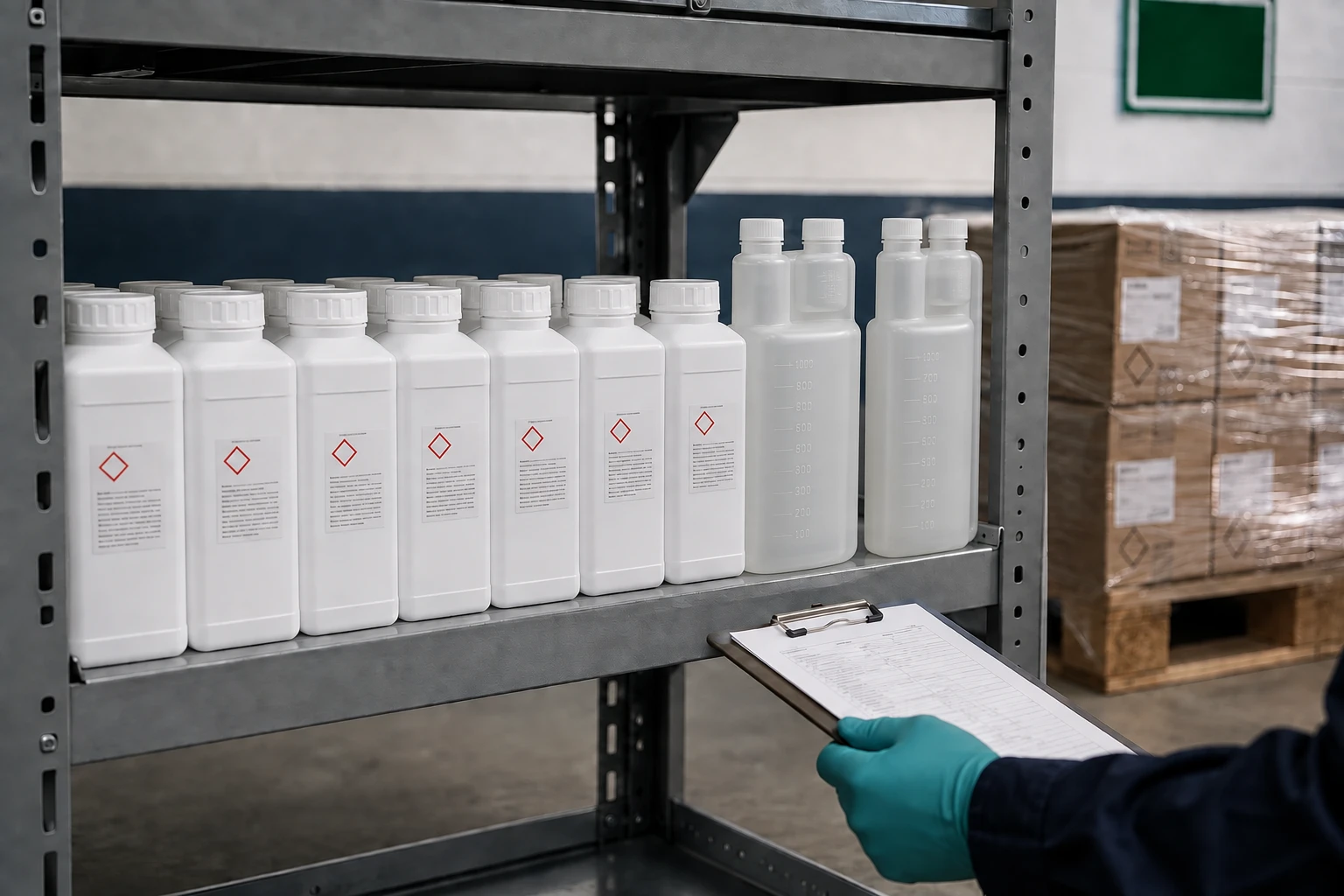
Crop protection, veterinary and hazardous industrial chemicals are packed under regulation, and the container is part of the compliance file. Our COEX bottles are produced to support dangerous goods requirements, tamper-evident and child-resistant closure systems, induction sealing, and the neck finishes standard across the agrochemical trade.
Barrier bottles also protect the operator and the environment, not just the product. Containing volatile actives inside the wall reduces vapour exposure during storage and handling and limits emissions across the supply chain. Our structures are engineered with a low barrier fraction, keeping the bottles compatible with existing HDPE recycling streams.
Send us your formulation
Barrier selection is a decision made on the actual product, not on a datasheet. Solvents with near-identical chemistry can behave very differently inside a real bottle across a real shelf life, and agrochemical formulations rarely contain just one active.
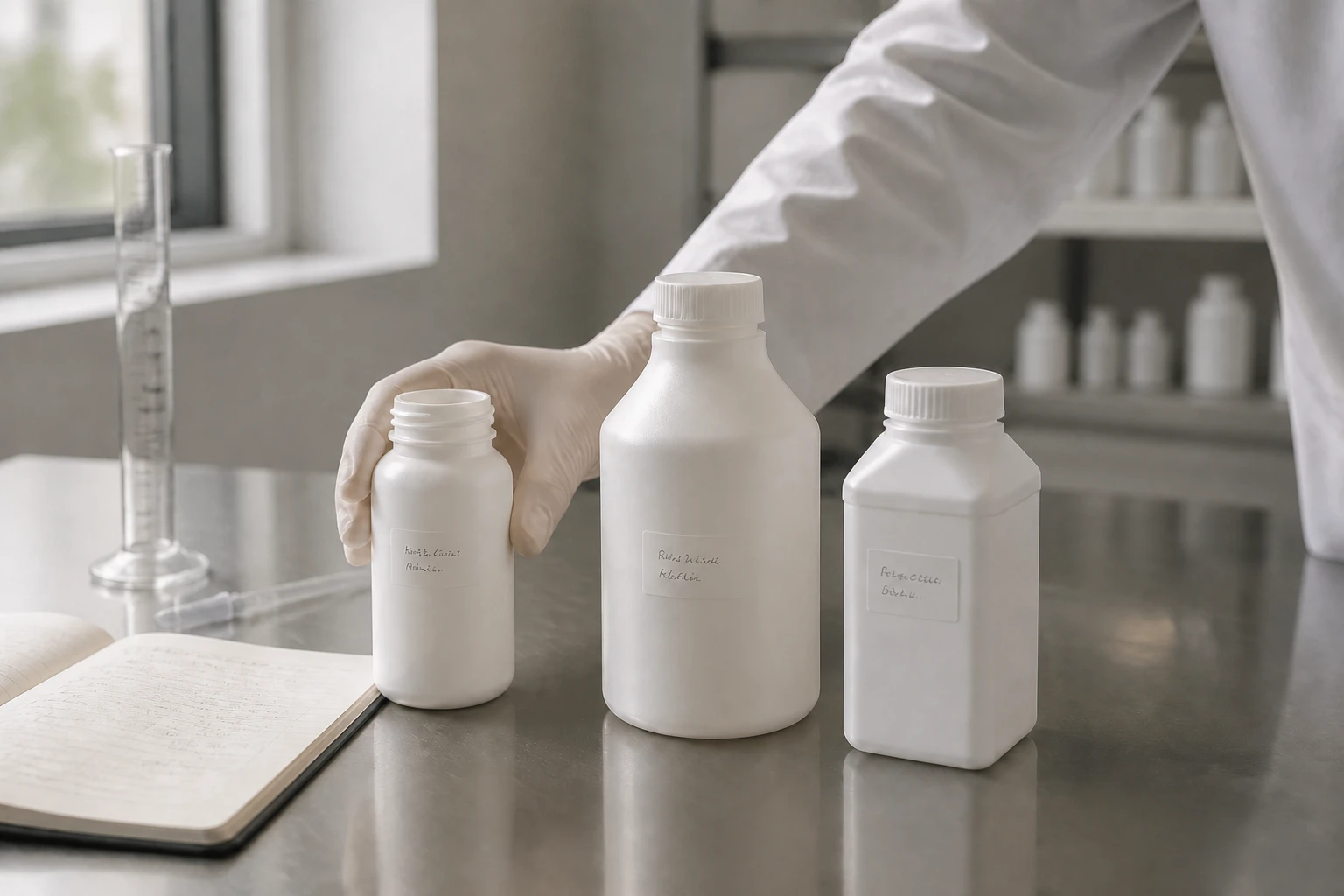
Share your formulation, fill temperature, target shelf life and distribution conditions. Our technical team will specify the barrier material, layer structure and wall thickness for your application, then validate it with filled-bottle compatibility testing before you commit to tooling.
Tell us what you need to package
Send us the product, the volume and the closure you have in mind. We will come back with a specification and a price.
Request a quote